
From painstaking handcraft in test tubes to AI-driven smart factories — the complete story of peptide synthesis
Peptide Scientific Inc. | July 2026
A Fact You Probably Didn’t Know
Something extraordinary is happening inside your body right now: thousands of tiny molecules called peptides are orchestrating how your body works. Some tell you “it’s time to eat,” some fight invading bacteria, others repair your skin. The history of peptide synthesis — how scientists learned to build these molecules in the lab — spans over a century of breakthroughs, accidents, and sheer genius.
Insulin keeps your blood sugar stable without daily injections. Antimicrobial peptides help your immune system wage war. Cosmetic peptides maintain your skin’s elasticity. Peptides act like “text messages” between cells, transmitting instructions that keep the body running. Sounds impressive, right? But here’s the catch: natural peptides are fragile, scarce, and extremely hard to harvest. Scientists spent over a century learning how to “manufacture” peptides in the lab — and that journey is far more fascinating than you might expect.
Did you know? Over 7,000 peptides exist naturally in the human body, but only a fraction can currently be synthesized artificially. Every breakthrough in synthesis methods means more diseases might be conquered.
This article tells the story of that “peptide-making road.” Don’t worry about understanding the chemistry — we’ll explain 120 years of scientific breakthroughs as an engaging story of building molecular LEGOs.
Chapter 1: Scientists Wanted to Build LEGOs, but Had No Instructions (1902–1962)
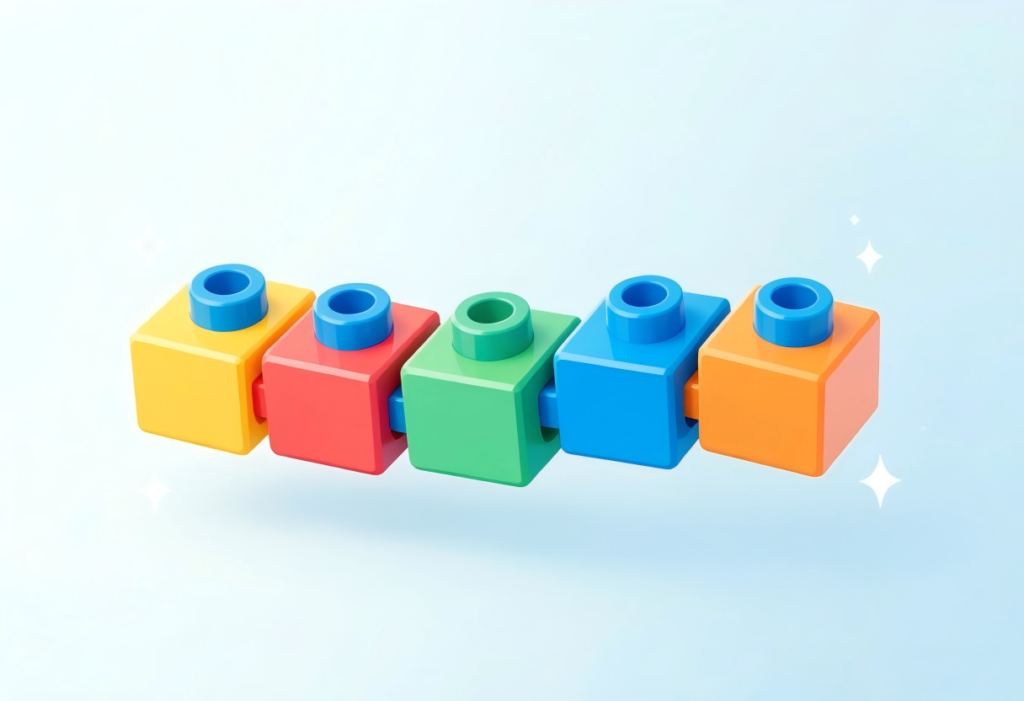
Imagine this: you have a box of LEGO bricks, each identical in shape (these are amino acids), and you need to snap them together in a specific sequence to form a chain (this is a peptide). Sounds easy? But there’s a problem —
Imagine building LEGOs: Each brick has “two ends” — both ends want to connect. Without control, bricks snap together randomly, creating a tangled mess instead of the neat chain you want. This was the core dilemma chemists faced before 1902.

Emil Fischer: The First Person to Say “We Can Build Chains”
In 1902, German chemist Emil Fischer declared that amino acids could be linked in sequence. He personally assembled the shortest possible “chains” — just two or three bricks snapped together (dipeptides and tripeptides). Modest as they were, this proved one critical thing: artificial peptide construction was not a fantasy. Fischer earned the title “Father of Peptide Chemistry” and opened a door — though behind it lay a long, arduous road.
The Invention of “Caps”: Preventing Bricks from Connecting Randomly
To solve the “random connection” problem, the key was this: during assembly, temporarily “cap” the end you don’t want connecting, leaving only the target end exposed. After one brick snaps on, remove the cap and prepare for the next connection.
In 1932, chemist Max Bergmann invented the first “cap” — the benzyloxycarbonyl group (abbreviated Z). With caps, chemists could finally build chains step by step. But this method had a fatal flaw: after each connection, the entire chain had to be fished out of solution, cleaned, and re-immersed for the next step. Imagine building a 10-brick chain and having to fish it out 10 times — by the end, most of the chain has been lost. Chains longer than 10 bricks were essentially impossible.
Early solution-phase synthesis required months to produce oxytocin (a 9-amino-acid hormone) — entirely by hand, with artisanal-level precision that few chemists could master.
Oxytocin: The First “Built” Living Peptide
In 1953, Vincent du Vigneaud achieved something earth-shattering: he built oxytocin — a 9-brick hormone peptide. This wasn’t a decorative test-tube artifact; the synthesized molecule was identical to the natural version and functioned exactly the same. Du Vigneaud received the 1955 Nobel Prize in Chemistry.
But oxytocin was only 9 bricks. Building longer peptides? That was still a nightmare. Scientists desperately needed a better method — one that didn’t require “fishing out and washing” at every step.
Chapter 2: A Genius Idea — Stick the LEGO to a Board and Build Upward (1963–1984)
1963 brought the turning point. R. Bruce Merrifield at Rockefeller University made a decision that changed everything:
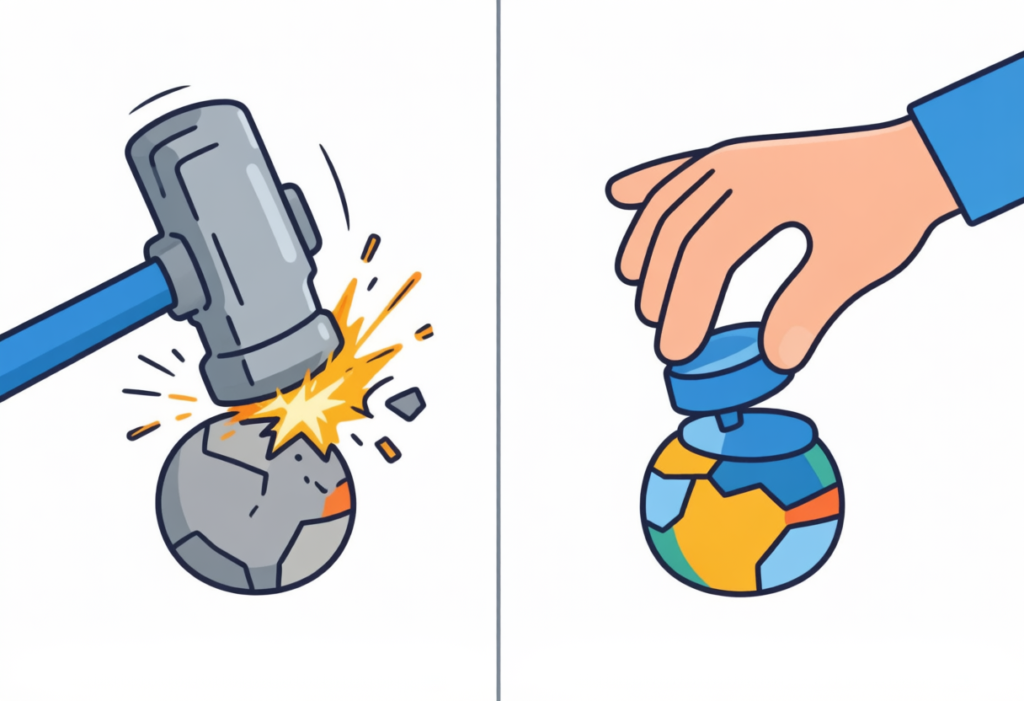
The genius idea arrives: If you glue the first brick to a board (resin), then build the chain directly on the board — after each connection, just dip the board in water and rinse. Excess parts wash away; no need to “fish anything out.” When the chain is complete, use a peptide cleavage system — a specialized chemical cutting method — to cleanly slice the whole thing off the board. This is the core concept of Solid Phase Peptide Synthesis (SPPS).
Sounds simple? That’s precisely what makes it genius. Merrifield transformed the nightmare of “fishing out and washing after every step” into the simplicity of “just rinse the board.” Synthesis that took weeks or months now required only days or hours. This revolutionary method — later known as Merrifield Solid Phase Peptide Synthesis — fundamentally reshaped the entire field of peptide chemistry.
Merrifield’s 1963 paper became the fifth most-cited article in the Journal of the American Chemical Society’s entire history — referenced by scientists worldwide over 10,000 times.
What Did Merrifield Build?
He quickly used his method to assemble bradykinin (9 bricks) and angiotensin (8 bricks), proving SPPS worked. In 1969, he stunned the academic world by synthesizing ribonuclease A — a 124-brick “super chain” that catalyzed chemical reactions exactly like the natural enzyme. This proved: chemically manufactured molecules can possess identical functionality to natural ones.
Boc — A Better “Cap”
Merrifield also replaced the old Z “cap” with a new one: Boc (tert-butyloxycarbonyl). The advantage? Boc caps detach quickly under mild acid treatment (trifluoroacetic acid), perfectly compatible with the “build on board → rinse → remove cap → add next brick” cycle. This Boc strategy became the chemical foundation of the first Boc Peptide Synthesizers.
The Nobel Prize: The Ultimate Recognition of a Genius Idea
In 1984, Merrifield received the Nobel Prize in Chemistry solo for “the development of solid-phase peptide synthesis” — a rare solo award in Nobel chemistry history. From the 1963 conceptual paper to the 1984 Nobel, SPPS had in 21 years completely transformed peptide synthesis from a specialist’s manual craft into a standardizable, automatable, and scalable technology platform.
Chapter 3: Machines Start Doing the Work — Automation Arrives (1965–1990)
SPPS’s stepwise workflow naturally suits machines — build brick → rinse → remove cap → build next brick. Each step is repetitive, precise, and programmable. The logical next breakthrough: let machines handle it.
The First “LEGO-Building Machine”
In 1965, Merrifield himself assembled the world’s first automated peptide synthesizer. This machine automatically controlled solvent and reagent delivery, reaction times, and wash cycles — essentially an “automatic LEGO-builder” that didn’t require a chemistry specialist to babysit. Though early machines were rough, they opened a door: ordinary labs could now produce synthetic peptides without top-tier chemists.
Think of it like going from “hand-sewing” to “sewing machines”: A sewing machine isn’t necessarily more refined than hand-stitching, but it’s dozens of times faster and anyone can operate it. The first peptide synthesizer was the “sewing machine” of peptide chemistry.
Commercial Synthesizers Enter the Market
In 1968, the first commercial peptide synthesizer appeared. Over the following decades, companies launched synthesizers based on both Boc and Fmoc chemistry. In 1987, the first commercial multi-channel peptide synthesizer debuted — one machine building multiple chains simultaneously. These devices enabled pharmaceutical companies and CROs to offer custom peptide synthesis services at scale, moving peptides from the lab to the marketplace.
Fmoc — Another “Cap,” Gentle and User-Friendly
In 1970, Carpino and Han invented a different protecting group “cap”: Fmoc (9-fluorenylmethoxycarbonyl). Unlike Boc caps requiring acid to remove, Fmoc caps detach with just a mild alkaline soak for ~10 minutes — without affecting acid-sensitive parts.
Think of it this way: Boc caps require brute force to pry off, while Fmoc caps pop off with a gentle press. The gentle approach means less damage, higher purity, and better yield. From here, peptide synthesis entered a Boc/Fmoc “dual-track” era — each cap type has its ideal applications, with Boc and Fmoc peptide synthesizers serving distinct market niches.
Chapter 4: Supporting Cast Matters — Resin and Protecting Group Evolution (1967–1996)
The starring roles belong to Merrifield and SPPS, but great leads need great supporting cast. In SPPS, the “board” (resin) and “caps” (protecting groups) are the supporting cast — their continuous upgrades made brick-building increasingly precise and flexible. Key milestones:
- 1967: Sakakibara invented HF cleavage — a sharper “chemical knife” that cleanly slices completed peptide chains from the resin board, later evolving into dedicated peptide cleavage systems
- 1970: BHA resin appeared — enabling chains to carry a “tail” (amide) at the end, closer to natural peptide forms; the Fmoc protecting group was born the same year
- 1973: Wang resin debuted — a board specifically designed for the “gentle Fmoc cap,” later becoming the standard carrier for Fmoc-SPPS, still widely used today
- 1977: The orthogonal protection concept emerged — like installing “color-coded caps” on bricks: red caps only open with red keys, blue caps only with blue keys, enabling precise synthesis of complex peptides
- 1987: Rink resin arrived — letting Fmoc chemistry also produce chains with “amide tails”; the Sieber linker appeared for gentler cleavage
- 1988: 2-Chlorotrityl chloride resin emerged — allowing completed chains to be “released” from the board intact, with all protecting groups still on, facilitating further complex assembly
- 1996: Pseudoprolines debuted — like a “temporary folding clip” that prevents chains from tangling themselves during assembly, dramatically reducing failure rates for “difficult sequences”
Chapter 5: From “One Chain at a Time” to “Hundreds Simultaneously” — High-Throughput Era (1985–2010)
By the 1980s, scientists weren’t satisfied with building one chain at a time — they wanted to produce hundreds of different chains simultaneously and quickly screen for useful ones.
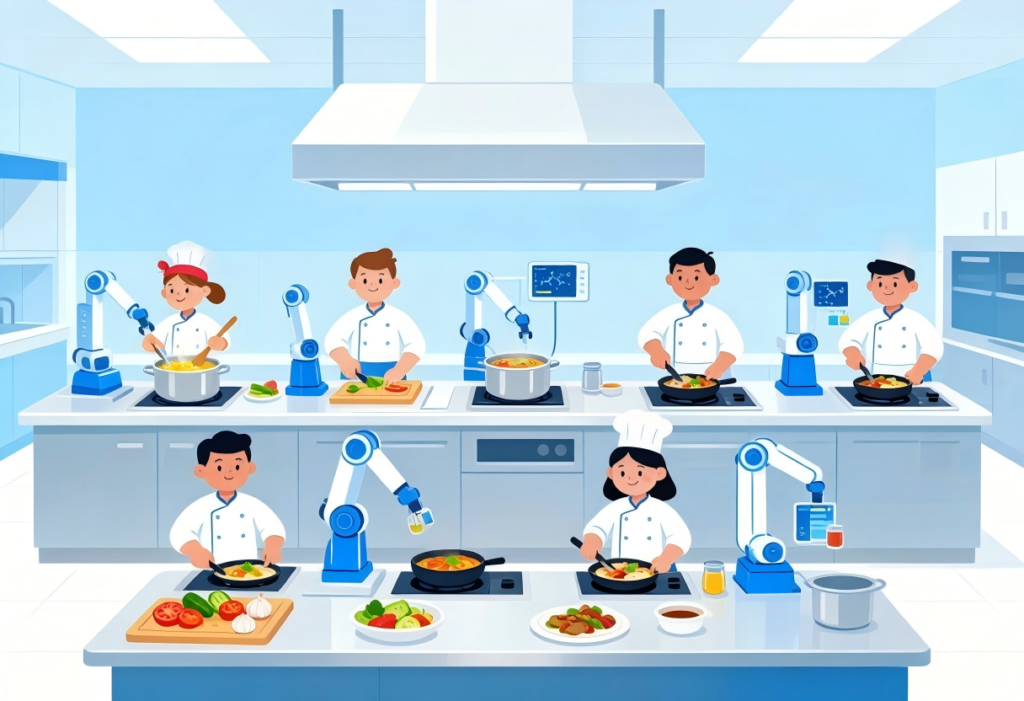
Think of upgrading from “one chef making one dish” to “a mega-kitchen cooking 100 dishes at once”: A high-throughput peptide synthesizer is like a super-kitchen with 100 burners, each cooking a different recipe. Afterward, you taste one by one to find the best dishes. This is the logic of drug screening — build many different peptides, quickly find the ones that can treat diseases.
Peptide Libraries: A “Kaleidoscope” of Chains
In 1985, parallel synthesis methods were proposed, enabling scientists to build multiple different peptides in a single experiment. In 1988, the “split-mix” strategy arrived, creating a peptide library containing thousands of distinct sequences in one batch. This technology supercharged drug screening and structure-activity relationship (SAR) research — instead of synthesizing and testing one peptide at a time, scientists could now batch-produce and batch-screen, directly catalyzing market demand for high-throughput peptide synthesizers.
Native Chemical Ligation: Welding Short Chains into Long Ones
In 1994, Stephen Kent invented Native Chemical Ligation (NCL) — a method to seamlessly “weld” two short peptide chains into one long chain in aqueous solution. Think of it this way: you can’t build a 100-brick chain in one go, but you can build two 50-brick segments and then use a “chemical welding torch” to fuse them. NCL extended the reachable length of chemical synthesis from ~50 amino acids to 100+ and even 200+, culminating in the 2007 synthesis of a 203-residue HIV protease — pushing peptide synthesis into protein territory.
Stapled Peptides: Adding a “Lock” to the Chain
In 2000, scientists devised another clever trick — stapled peptides. Some peptide chains “collapse” in the body, losing their active shape. Schafmeister and Verdine developed “chemical staples” that lock key portions of the chain in place, like using a real stapler to hold folded paper in shape. Stapled peptides dramatically improve survival time and cell penetration in the body. Cyclic peptide synthesis technologies also advanced rapidly. These novel architectures challenged traditional linear synthesis, driving new rounds of innovation in strategies and instrument design.
Chapter 6: AI as Director, Microwave as Accelerator — Next-Gen Smart Synthesis (2010–Present)
Microwave Peptide Synthesizers: Hitting “Fast Forward” on Slow Reactions
Some peptide chains “jam” during assembly — the chain tangles on the resin, and new bricks can’t snap on. Traditional solutions — long waits and excess reagents — were inefficient.
In the 2010s, microwave peptide synthesizers arrived. Microwaves act like a “heating fast-forward button” — precisely controlling temperature and accelerating each peptide coupling reaction from 30 minutes down to mere minutes while untangling “jammed” chains. Microwave peptide synthesizers quickly became the go-to weapon against “stubborn peptides” in research labs.
Asynchronous Synthesis: One Machine, Six Different Tasks Simultaneously
Traditional multi-channel synthesizers could build multiple chains, but with a limitation: all channels had to execute the same protocol — like six chefs all making the same dish.
Asynchronous synthesis is like six chefs in the same kitchen each cooking their own recipe: Asynchronous peptide synthesizers broke the old constraint — each channel independently configures its own “recipe” (sequence, activation method, reaction time), truly achieving “one machine, multiple tasks.” From the 6-channel Nova series research synthesizer to the 106-channel Tetras high-throughput platform, asynchronous architecture represents the leap from “batch parallel” to “intelligent parallel” in peptide synthesizer evolution.
AI Joins the Team: Predicting Where You’ll Get Stuck
Now, AI is joining peptide synthesis. Algorithms analyze a peptide sequence and tell you “step 23 might jam” or “this step works best with reagent X” — essentially providing a “LEGO-building walkthrough” so you don’t have to trial-and-error your way through. Meanwhile, green chemistry is reshaping synthesizer design: solvent recycling reduces waste by 40%, eco-friendly protocols are replacing toxic DMF, and real-time UV monitoring lets you see how each step went during assembly — no need to wait until the end to discover problems. These trends point toward one direction: smarter, greener, more transparent.
Conclusion: 120 Years of Peptide Synthesis — The Journey Continues
From Fischer’s 1902 declaration that “we can build chains,” through Merrifield’s 1963 “stick-to-board” invention, to today’s AI-directed asynchronous high-throughput platforms — peptide synthesis has traversed a 120-year journey.
Each milestone — protecting group “caps,” solid-phase “board method,” automated “LEGO-building machines,” microwave “fast-forward buttons,” asynchronous “multi-task kitchens,” and AI “walkthrough predictions” — isn’t an isolated breakthrough but an incrementally layered, mutually supporting evolutionary node. And every evolution means more diseases might be conquered, more drugs discovered, more people’s health improved.
As a peptide synthesizer manufacturer dedicated to advancing synthesis technology, Peptide Scientific Inc. stands squarely upon this century of heritage. From Nova series research-grade synthesizers (https://www.peptidescientific.com/pepaxis-nova3-peptide-synthesizer-product/) to Atlas pilot-scale platforms, from Sirius industrial-scale equipment to the Tetras 106-channel high-throughput asynchronous synthesizer, every product carries the essence of each generation’s technology from this history of peptide synthesis.
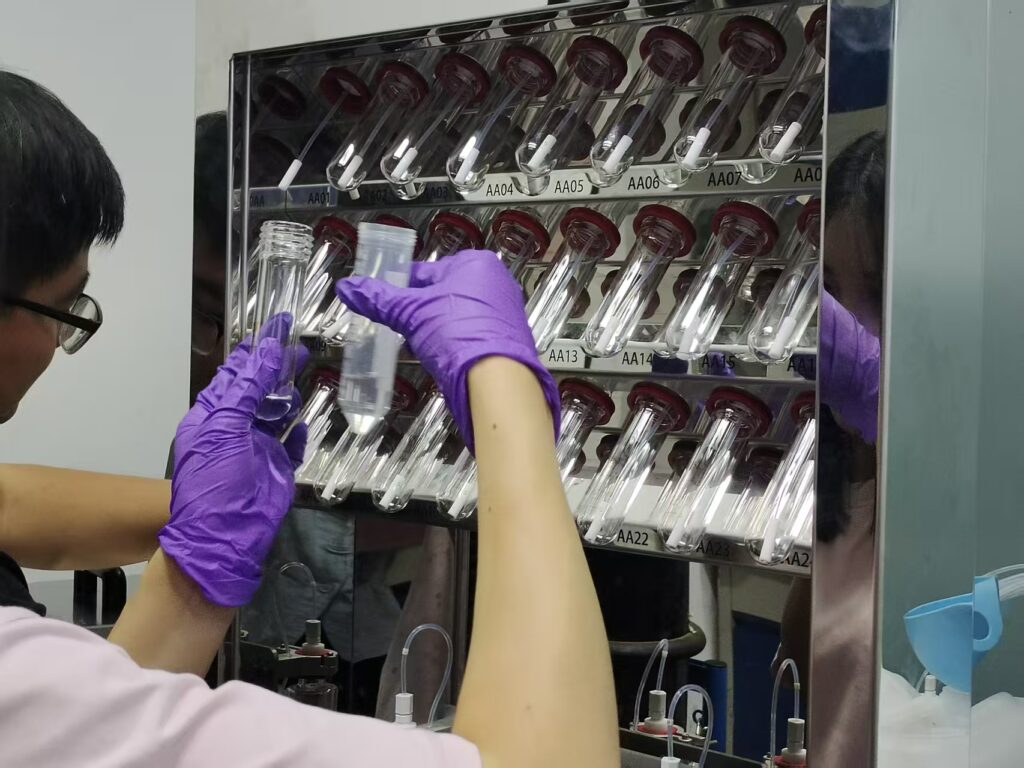
To learn more about Peptide Scientific’s PepAxis™ peptide synthesis system and explore which synthesizer fits your research needs, visit peptidescientific.com /pepaxis.com
Email: echoliu@dilunbio.com